Mobilities Reassurance Layer

Why Mobility Innovation Needs to Design for Confidence, Not Just Convenience
Transport innovation has a habit of describing the future through capability.
Electric vehicles will decarbonise. Connected systems will optimise. Rail networks will integrate. Shared mobility will reduce ownership. Apps will simplify journeys. Automation will remove friction. Multimodal platforms will help people move more intelligently across cities, suburbs and regions.
All of that may be true. But it misses the more human question sitting underneath mobility change: what does someone need to feel, understand and believe before they are willing to move differently?
Because people rarely change transport behaviours simply because a better system exists. They change when that system feels legible, reliable, low-risk and emotionally worthwhile. They change when the new behaviour feels like it will work not just in principle, but on a wet Tuesday morning, with a low phone battery, a delayed train, a child to collect, a meeting to reach, or 14 miles of remaining EV range.
The next wave of mobility innovation will not be won by convenience alone. It will be won by reassurance.
Mobility change is a confidence transition
Every shift in mobility asks people to give something up.
Switching to an EV means giving up the known rituals of refuelling, engine noise, range familiarity and long-established ownership confidence. Moving from car to rail, bus or shared mobility means giving up control, privacy, directness and certainty. Using multimodal travel means trusting multiple systems to behave as one. Adopting digital ticketing, connected services or subscription mobility means believing that the invisible infrastructure behind the experience will not fail at the point of need.
That is why mobility innovation is not just a technical transition. It is a confidence transition.
The Future Laboratory’s 2026 forecast frames the year around stronger connection “between people, systems and senses”, with industries learning to design for empathy, adaptability and emotional resonance. That lens is highly relevant to transport because mobility is not simply movement. It is one of the most emotionally loaded systems in daily life: tied to time, autonomy, safety, identity, access, status, cost and control.
A mobility offer may be efficient on paper, but if it feels confusing, fragile, expensive, exposed or hard to recover from when something goes wrong, people will hesitate. And hesitation is one of the most underestimated barriers to adoption.

Infrastructure alone does not create adoption
The UK EV market is a useful example. Battery electric vehicles reached 27.3% of new car registrations in May 2026, with BEV registrations up 34.2% year on year. That is significant growth. But the same SMMT data shows BEV share still below the 33% ZEV mandate target, even as manufacturers offer more choice and competitive deals.
This tension matters. It shows that infrastructure, availability and policy pressure can move the market, but they do not automatically remove the emotional and behavioural barriers around cost, charging, reliability, range, resale value and everyday fit.
In other words: adoption can be growing and still not feel easy.
EVs are often discussed as a charging infrastructure problem, but the deeper challenge is a reassurance problem. Drivers do not only ask, “Where is the charger?” They ask: “Will it work?” “Will it be available?” “How much will it cost?” “How long will I be there?” “What happens if it fails?” “Can I trust this for my real life?”
Recent UK EV research points to exactly this gap. Cox Automotive’s 2026 UK EV adoption report notes that cost perception, battery myths and charging confidence are still slowing adoption, while experience and education are powerful converters: 95% of EV drivers surveyed said they would choose electric again.
That is a strategic signal for mobility brands. The issue is not always the product itself. It is the confidence architecture around the product.
The reassurance layer is the missing strategic layer
Transport systems are often designed in layers: infrastructure, service, interface, payment, operations, communications. But the layer that frequently arrives too late is reassurance.
The reassurance layer is the emotional, informational and sensory infrastructure that helps people trust a new mobility behaviour before, during and after they use it.
It is not just customer service. It is not just signage. It is not just an app screen or explainer video. It is the total system of cues that reduces perceived risk.
For an EV driver, reassurance might mean transparent charging prices, live charger reliability, visible dwell-time expectations, simple payment, safe lighting, weather protection and clear alternatives if a charger is occupied.
For a rail passenger, it might mean disruption information that is human, not operational; station environments that feel safe and navigable; assistance that works consistently; and onward connections that are easy to understand under pressure.
For shared mobility, it might mean clearer pricing, better first-use onboarding, trustworthy vehicle condition, safe parking locations, predictable availability and a stronger sense of social acceptability.
For multimodal systems, it might mean reducing the anxiety of the handover: the point where one mode ends and another begins. The walk from station to bus stop. The transfer between app, ticket and platform. The uncertainty of whether the final mile will be obvious, safe and manageable.
The UK’s National Travel Survey reinforces the importance of these transitions. In 2024, 60% of trips involving more than one transport mode began with walking, and 64% of multimodal public transport trips began with walking. That means the success of “integrated mobility” often depends on the ordinary, sensory and spatial details around the journey: the first pavement, the crossing, the lighting, the signage, the waiting space, the feeling of safety and the confidence that the connection will work.
The reassurance layer lives in these details.
Reassurance is sensory, not just informational
Mobility brands often default to information when trying to build trust. More data. More alerts. More maps. More instructions. More FAQs.
But reassurance is not only cognitive. It is sensory.
Stylus’ 2026 thinking on colour and materials for wellness highlights how design choices can shape environments that “soothe, energise and protect”, with relevance across interiors, technology, transport and healthcare.
That is important because transport environments are full of stress triggers: crowding, noise, glare, uncertainty, time pressure, unfamiliarity, physical exposure, poor wayfinding and lack of control. A station concourse, EV charging hub, autonomous shuttle, airport transfer, mobility app or rail carriage can either amplify those stresses or soften them.
The materials, lighting, colour, acoustics, interface language, seating, thresholds, sightlines and rhythms of an experience all communicate whether a system is safe, premium, intuitive, accessible or chaotic.
A future mobility experience should not only say “you can trust this”. It should feel trustworthy before the user has to think too hard.
This is where transport innovation can learn from hospitality, healthcare, consumer technology and retail. The best experiences do not ask users to decode the system. They make the right behaviour feel obvious.

Better mobility experiences reduce perceived risk before asking people to act differently
The commercial implication is simple: before asking people to change, mobility brands need to design belief.
This is particularly important because mobility decisions are rarely made in ideal conditions. People are often moving under constraint. They are late, tired, distracted, carrying things, managing dependants, navigating unfamiliar places, balancing cost or making decisions with incomplete information.
That means a new mobility proposition has to do more than be technically better. It has to feel more dependable than the behaviour it wants to replace.
This is why “convenience” can be a limited innovation goal. Convenience assumes the user already trusts the system and simply wants it to be faster or easier. But many emerging mobility categories sit before convenience. They still need to earn credibility.
The strategic question is not only: “How do we make this journey seamless?”
It is: “How do we make this journey feel safe enough, clear enough and worthwhile enough to choose in the first place?”
That shift changes the work. It moves mobility strategy beyond touchpoint optimisation and towards adoption design. It asks brands, operators, local authorities and transport innovators to understand the psychological barriers that sit between infrastructure and behaviour.
From journey mapping to confidence mapping
One practical way to approach this is to move from journey mapping to confidence mapping.
A traditional journey map asks what the user does at each stage. A confidence map asks what the user needs to believe at each stage.
Before the journey:
Do I understand the offer?
Do I know what it costs?
Do I believe it will work for my life?
Do I trust the brand or operator?
Do I know what happens if something changes?
During the journey:
Do I feel safe?
Am I in control?
Is the information clear?
Are the spaces legible?
Can I recover if the system fails?
After the journey:
Was the experience worth repeating?
Did it save time, money or stress?
Did it make me feel more capable?
Would I recommend it to someone else?
This framing is especially useful for mobility categories trying to scale adoption: EV charging networks, rail station upgrades, passenger experience programmes, connected mobility platforms, active travel services, first-and-last-mile systems, subscription mobility, autonomous pilots and transport decarbonisation initiatives.
The opportunity is not just to design the journey. It is to design the user’s confidence to take that journey again.
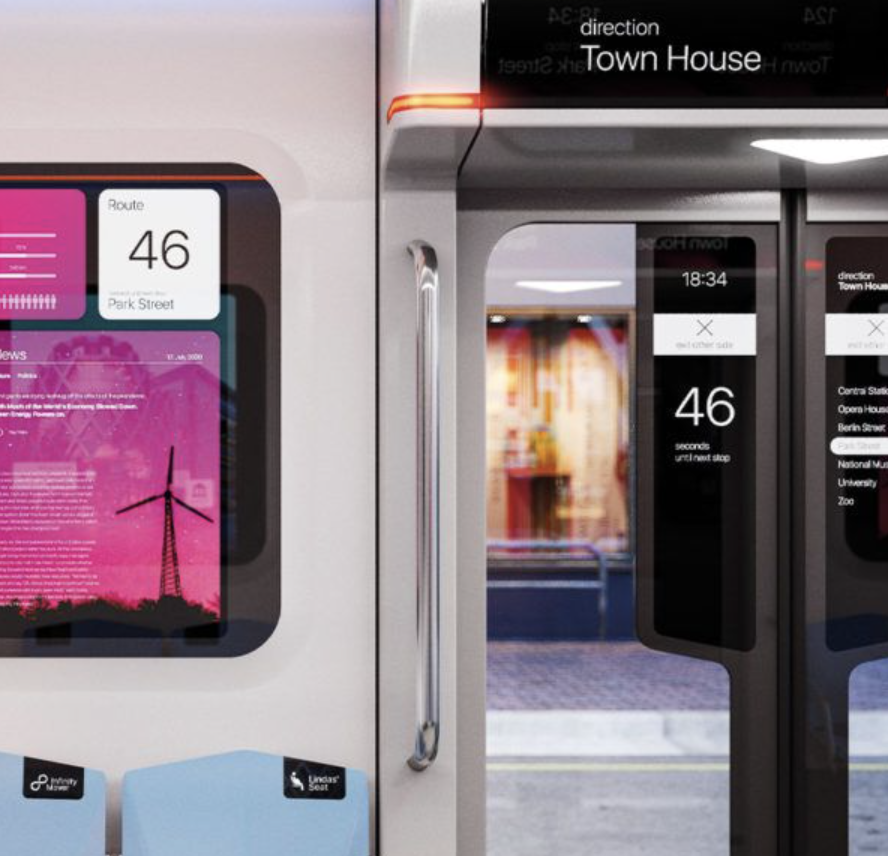
The future of mobility depends on emotional infrastructure
The future of transport will still require hard infrastructure. More chargers. Better rail. Cleaner fleets. Safer streets. Smarter systems. Stronger integration. Better policy.
But infrastructure alone will not deliver the behavioural shift mobility needs.
People need confidence infrastructure too: clear information, visible reliability, intuitive spaces, emotionally intelligent services, inclusive access, sensory comfort, cost transparency and recovery systems when things go wrong.
The next wave of mobility innovation will be judged not only by how advanced it is, but by how believable it feels.
Because the user does not experience a transport system as a policy target, a technology roadmap or an infrastructure investment. They experience it as a decision:
Can I trust this to get me where I need to go?
That is the reassurance layer. And for mobility brands, operators and innovators, it may become the most important layer of all.
Mobility brands do not just need better concepts. They need clearer adoption strategies.
For future transport, EV, rail, passenger or connected mobility offers, the opportunity is to translate behavioural insight into sharper experience principles, stronger propositions and more credible innovation direction. Designing not just how people move, but what they need to believe before they move differently.