Consumers Seek Proof Over Promise
Why FMCG Brands Need a Stronger Reason to Exist in the Private Label Era
Private label used to be easy for brands to explain away.
It was the cheaper option. The compromise. The thing people bought when money was tight, when inflation bit, or when the branded version felt temporarily out of reach.
That story no longer holds.
Private label has become a normalised, trusted and increasingly sophisticated part of the weekly shop. It is not just winning because it is cheaper. It is winning because, in many categories, shoppers no longer see enough difference to justify paying more. In the UK, Simon-Kucher’s 2026 shopper research found that 51% of UK shoppers now predominantly buy private label products, describing it as a stable part of the weekly basket rather than a temporary response to inflation. The same research found that 49% of UK shoppers believe branded products are often overpriced without offering a noticeable quality advantage, while 46% say branded products rarely justify the higher price.
That creates a sharper strategic question for FMCG brands.
Not “how do we defend our brand?”
But: what are we uniquely useful for?
Private label has changed the meaning of value
Value used to be a fairly simple equation: lower price meant lower quality, while higher price suggested trust, consistency, taste, performance or status.
Private label has disrupted that equation.
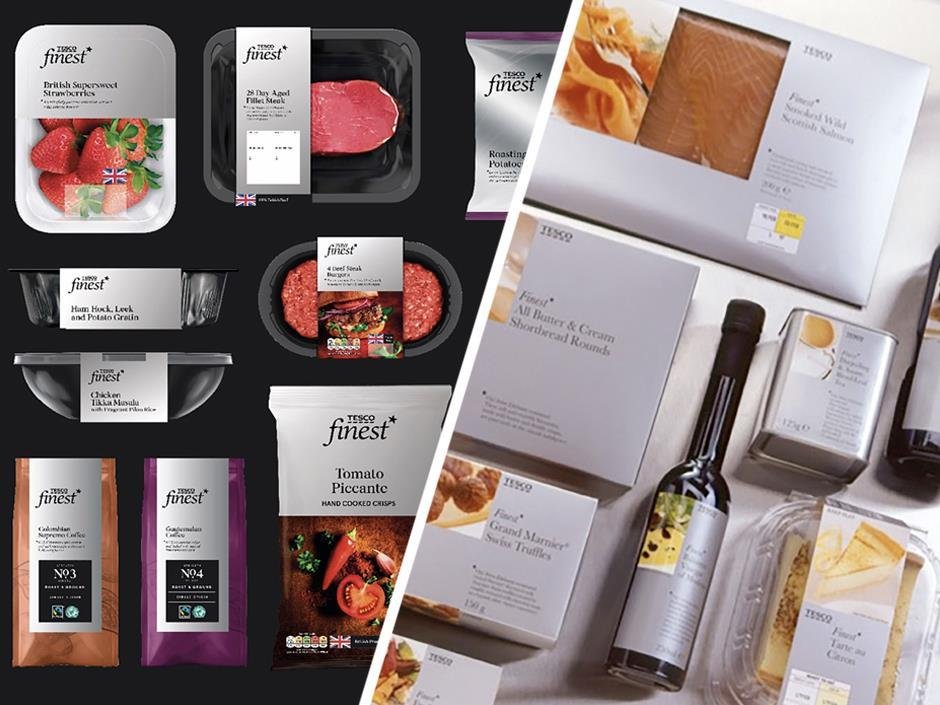
Retailers have spent years improving own-label quality, design, range architecture and premium tiers. Basic private label still plays a powerful role in essential categories, but premium private label is also becoming more credible, especially among higher-income shoppers. Simon-Kucher’s UK findings suggest a more tiered private label market, with 44% of shoppers buying basic private label exclusively or frequently, while premium private label is being adopted more often by higher-income consumers.
This matters because private label is no longer just undercutting brands on price. It is resetting the baseline for what “good enough” looks like.
For many shoppers, own-label is now trusted, familiar, convenient and low-risk. It performs well enough. It looks good enough. It tastes good enough. And in everyday categories, “good enough” is often enough to win.
That does not mean brands are dead. But it does mean the burden of proof has shifted.
Simon Kucher: A global shift to private label
Brand premiums are being interrogated
For decades, FMCG brands could rely on a powerful combination of memory structure, shelf presence, advertising, packaging and familiarity. These things still matter, but they no longer automatically justify a premium.
The shopper is more forensic now.
They are comparing price per gram. They are reading claims. They are weighing up whether the branded yoghurt, cereal, snack, sauce, drink or personal care product actually delivers something they cannot get from the retailer equivalent.
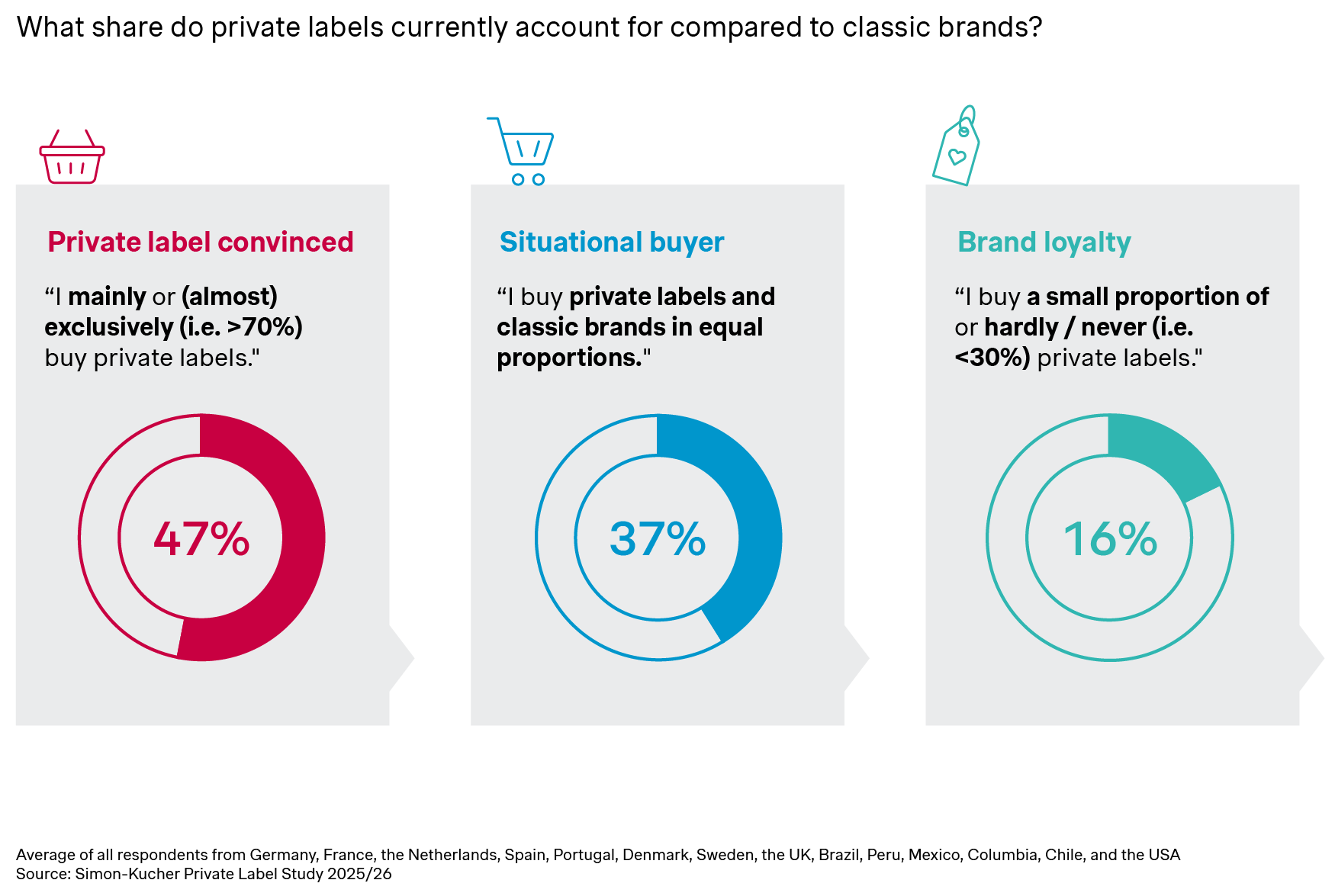
Globally, Simon-Kucher’s 2026 study found that nearly half of shoppers predominantly or almost exclusively buy private label, while only 16% remain primarily brand-focused. It also found that 57% of global consumers believe branded products are overpriced without offering a noticeable benefit.
This is not just a pricing issue. It is a proposition issue.
A brand premium can still be powerful, but only when people understand what the premium is buying them. Better taste. Better function. Better ingredients. Better format. Better ethics. Better emotional reward. Better cultural relevance. Better suitability for a specific occasion.
Without that, the brand becomes decoration around a product the shopper believes they can get elsewhere for less.
Simon Kucher: The new consumer mindset: Proof over promise
The new FMCG equation: proof, pleasure and permission
The next era of FMCG brand value will not be built on promise alone. It will be built on three connected forces: proof, pleasure and permission.
Proof is the tangible reason to believe. It is the functional, sensory, nutritional, format-led or ingredient-led evidence that explains why this product deserves its place. Proof can be a superior recipe, a better texture, a more useful pack format, a clearer health benefit, a more credible sourcing story or a product experience that genuinely outperforms the cheaper alternative.
Pleasure is the reason people want it. FMCG is not only rational. Taste, ritual, comfort, mood, indulgence and identity still matter enormously. The opportunity is not to strip brands down into functional evidence alone, but to make pleasure more specific.
What kind of pleasure is this?
Everyday comfort?
Selective indulgence?
Social sharing?
Personal reward?
Energy? Calm? Nostalgia? Discovery?
Permission is the reason people feel comfortable choosing it now. This is becoming more important as consumers become more intentional. WGSN’s SXSW 2026 coverage framed intentional consumption and moderation as a shift away from excess, with consumers seeking simplicity, transparency, emotional wellbeing and more considered choices. In that context, brands need to help people justify the choice emotionally, financially and practically.
The strongest FMCG propositions will sit at the intersection of all three.
A snack brand cannot just say “treat yourself.” It needs to define the occasion, the quality of indulgence and why this product earns the moment.
A health brand cannot just say “better for you.” It needs to show what is better, for whom, in what routine, and with what evidence.
A heritage brand cannot just say “trusted since 1924.” It needs to prove why that trust still creates a better product experience in 2026.
Heritage is not enough
Heritage can be a valuable asset, but it is not a strategy by itself.
In a more selective market, heritage needs to be activated as evidence, not nostalgia. A long-standing recipe might signal craft, but only if people can taste the difference. A founder story might create emotional connection, but only if it translates into present-day relevance. A brand’s category leadership might create awareness, but only if it continues to innovate in ways that solve real shopper tensions.
The Future Laboratory’s Future Forecast 2026 points to a marketing and branding landscape moving towards cultural fluency, honesty and purpose-led communication, as audiences demand depth and realness. That is highly relevant for FMCG because many branded products still rely on broad, polished and interchangeable claims: natural, uplifting, nourishing, premium, crafted, better, joyful.
The problem is not that these words are wrong.
The problem is that they are often unsupported.
When consumers are under pressure, overwhelmed by choice and increasingly used to credible private label alternatives, generic emotional language becomes easier to ignore. Brands need to move from claim-making to value-building.
Selective consumption changes the role of innovation
Innovation in FMCG is often treated as a pipeline exercise: new flavours, new formats, limited editions, seasonal extensions, health-led variants, premium tiers, collaborations and packaging updates.
But in the private label era, innovation needs a more strategic role.
It needs to clarify where the brand has permission to stretch, where it can credibly outperform private label, and where it can create new reasons for shoppers to reappraise the category. That means asking harder questions earlier:
Where is private label strongest, and why?
Where are shoppers becoming more selective?
Which occasions are underserved?
Which claims are losing credibility?
Which formats create genuine convenience?
Which sensory experiences are difficult for private label to replicate?
Which parts of the portfolio are defending value, and which are building future relevance?
This is where many FMCG brands need stronger portfolio role definition. Not every product should do the same job. Some products defend core volume. Some recruit new audiences. Some create premium justification. Some stretch the brand into new occasions. Some act as proof points for a wider positioning.
Without that clarity, portfolios become crowded, claims become repetitive and innovation becomes activity rather than advantage.
Brands need to define where they genuinely outperform
The real competitive task is not to beat private label everywhere. That is unrealistic.
The task is to identify where the brand has a genuine right to win.
In some categories, that might be sensory superiority: taste, texture, aroma, mouthfeel or finish.
In others, it might be functional performance: efficacy, nutrition, formulation, convenience or durability.
Sometimes it will be emotional: ritual, identity, confidence, comfort, social value or gifting.
And sometimes it will be cultural: a brand that understands emerging behaviours, speaks with credibility and creates products that feel connected to how people are actually living.
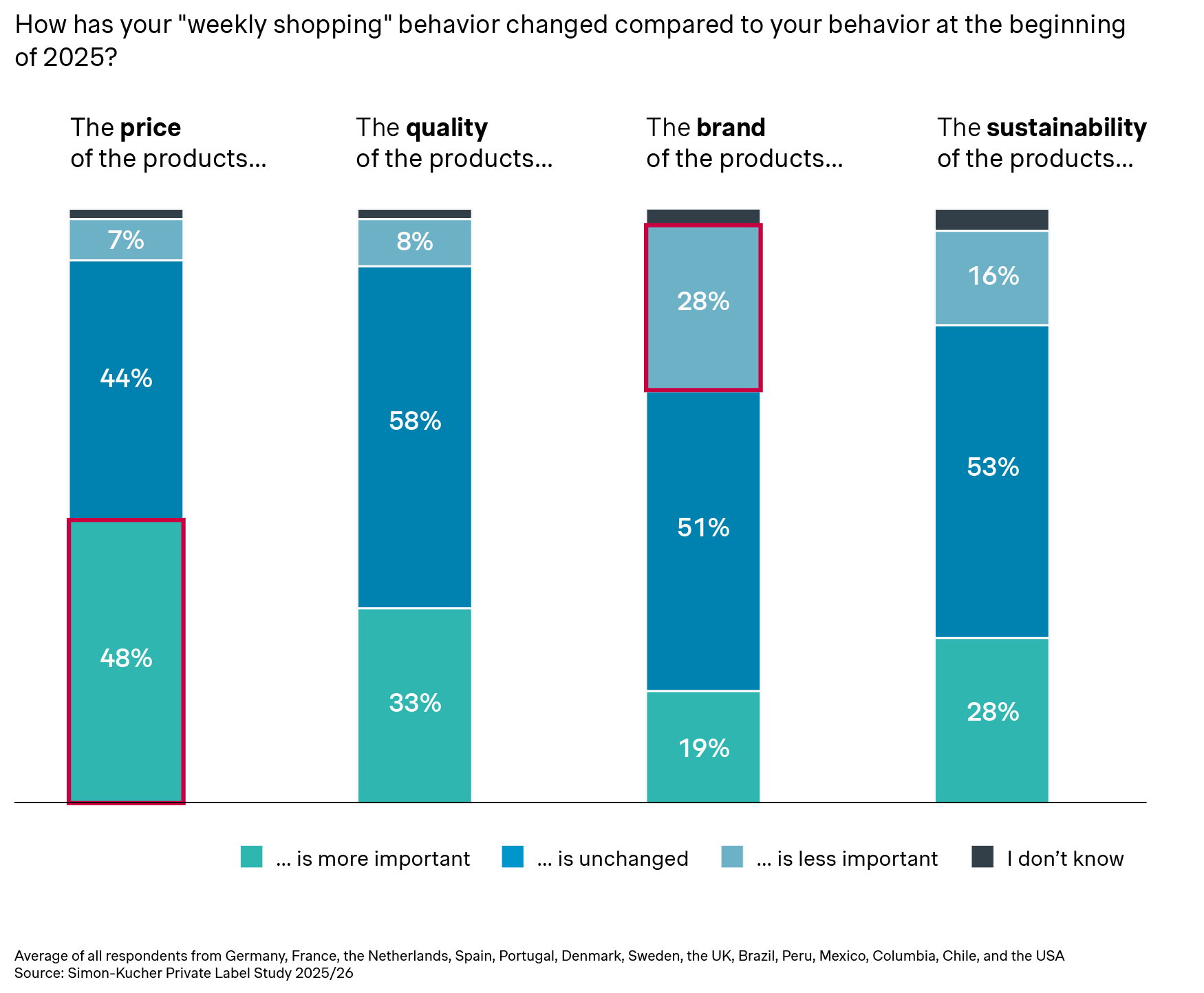
Simon-Kucher’s global private label analysis argues that shoppers now demand proof, not promises, and are increasingly unwilling to pay a premium without clear, tangible benefits. It also notes that private label is structurally reshaping shopper loyalty, making brands work harder to justify their place in the basket.
That should be a wake-up call for any brand still relying on awareness, visual polish or broad emotional positioning.
The future of FMCG premiumisation will be more evidence-led. More occasion-specific. More portfolio-aware. More behaviourally grounded.
The strategic task: build clearer value systems
The opportunity for brands is not simply to shout louder about why they are better.
It is to build clearer value systems.
That means connecting consumer insight, category behaviour, product truth and commercial ambition into propositions that are easier to understand and easier to choose.
A stronger value system should answer five questions:
What role does this product play in the shopper’s life?
What tension does it resolve better than the alternatives?
What evidence supports the premium?
What emotional or sensory reward makes it desirable?
What future behaviour is it helping the brand own?
This is where proposition strategy becomes commercially important. It is not just brand language. It is the link between what people value, what the product can credibly deliver, and where the business can grow.
For FMCG teams, the way forward is not more claims. It is sharper strategic definition: clearer category opportunity mapping, stronger portfolio roles, better evidence of advantage, and innovation pipelines built around real shopper tensions.
Private label has raised the bar.
Now brands need to prove why they deserve to be chosen.
If your brand is competing against private label, the answer is not more noise, broader claims or another layer of packaging polish.
It is a sharper value proposition, a clearer portfolio role and stronger evidence of why people should choose you.
That is where proposition strategy, category opportunity mapping, consumer research and innovation pipeline development can turn brand advantage from something assumed into something shoppers can actually see, feel and believe.