
What Hugo Eccles’ XP Zero reveals about owning occasions, resisting feature creep and using alternative realities to unlock better innovation.
A beautifully designed answer to the wrong question is still the wrong answer.
It can also be one of the most expensive mistakes an innovation team makes.
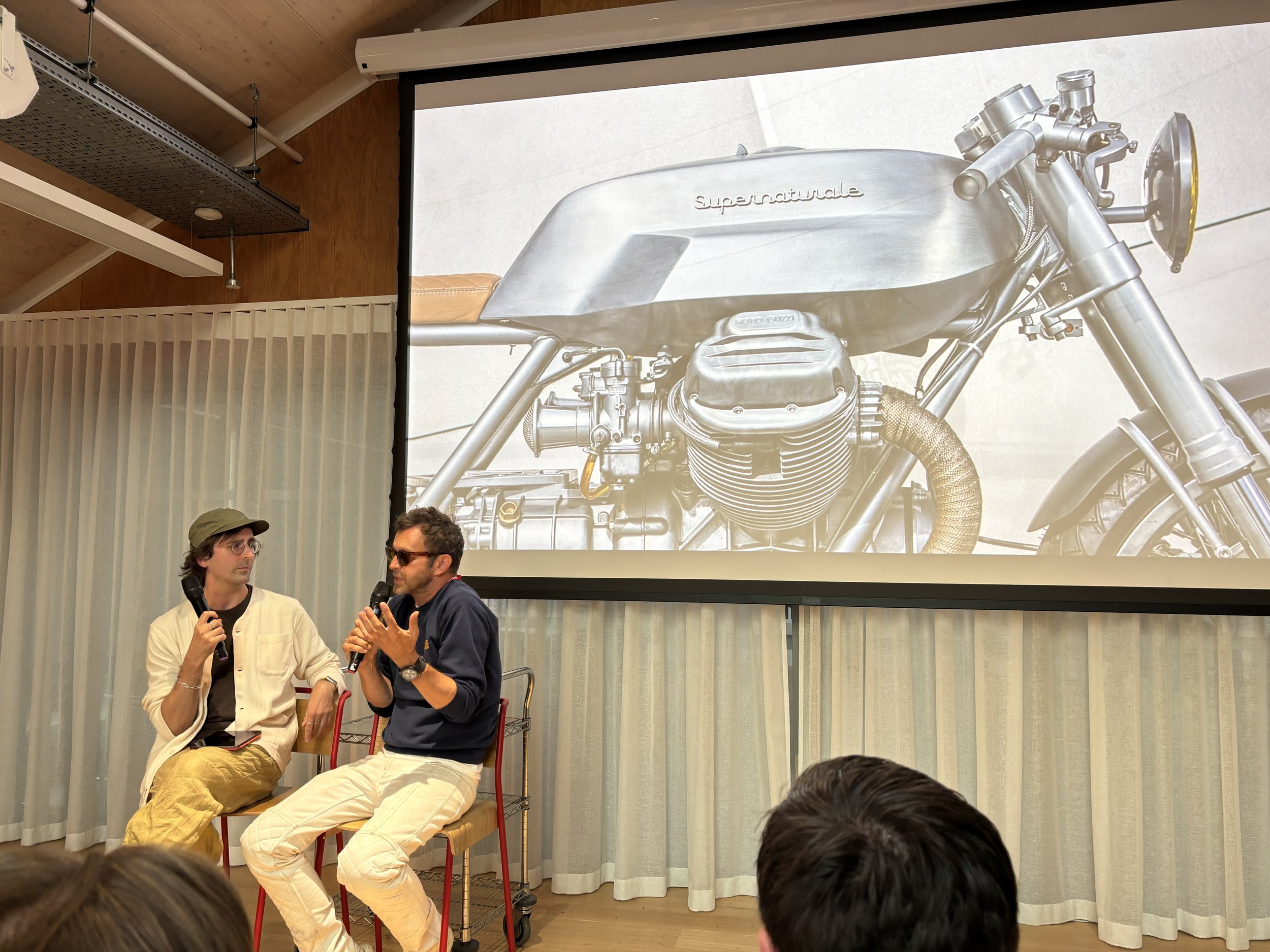
At a recent talk, industrial designer Hugo Eccles of UNTLD MOTO described designers as “playwrights, not prop makers.” His point was that design should begin before the physical object: with the behaviours, relationships and experiences that give it a reason to exist.
That idea challenges how many innovation projects are commissioned. By the time the designer becomes involved, the answer has often already been decided. The brief asks for a new product, another feature or a refreshed form, when the more valuable question may be whether that is what people need at all.
The designer’s role is therefore not simply to improve the proposed answer. It is to interrogate the question, expose the assumptions behind it and establish the conditions from which a better solution can emerge.
Own the context, not merely the product.
One of Hugo’s most useful examples was the kitchen table.
A company might classify it as a piece of dining furniture. But in everyday life, the kitchen table is also a workstation, homework surface, social meeting point, laundry-folding station, newspaper stand and temporary storage system.
Its strategic significance does not come from one product typology. It comes from the number of domestic behaviours it organises.
This creates a much broader question for innovation:
“What object, space or occasion structures the experience we want to improve?”
Brands often become trapped by the products they already make. A furniture company sees tables. An appliance company sees toasters. A motorcycle company sees motorcycles. Consumers, however, experience connected situations rather than neatly separated categories.
This is where “owning an occasion” becomes powerful. Marketing research into Category Entry Points similarly argues that brands grow by becoming mentally associated with the situations that trigger category consideration. Strategic design can take this further: not only helping a brand become remembered within an occasion, but identifying how it could improve the occasion itself.
However, “owning” should not be confused with stretching a brand across everything that happens nearby. Permission has to be earned through relevance, capability and a credible role in the experience.
Nor is the most visually prominent object always the most strategically important. The element organising behaviour might be an invisible rule, a service interaction, a storage constraint, a social relationship or a moment of transition.
The better principle is:
“Design around the element that organises the behaviour, whether it is an object, space, occasion, rule or relationship.”
People do not want the toaster. They want the toast.
The familiar drill analogy tells us that people do not want a drill; they want a hole. Look further, however, and they may not really want the hole either. They may want a shelf, a more organised home or the satisfaction of completing something themselves.
The same applies to the toaster.
The immediate functional outcome is toast. But the ultimate goal might be a quick breakfast before work, a predictable family routine, less food waste or the small pleasure of beginning the day well.
This aligns with Clayton Christensen’s Jobs to Be Done theory: people effectively “hire” products to help them make progress in a particular circumstance. Crucially, that progress is not only functional. It can also be emotional and social.
This is an important qualification. Moving from “toaster” to “toast” is useful, but stopping there can still produce an overly reductive brief. People may value the ritual, control, appearance and familiarity of using the toaster, not only its output.
The aim is therefore to uncover a hierarchy of goals:
What is the person trying to do?
Why does that outcome matter?
What are they ultimately trying to feel, change or become?
What circumstances make the job difficult today?
These questions can transform a brief.
“How might we add more settings to this toaster?” keeps the team inside the existing product architecture.
“How might we help people prepare the breakfast they want with less attention, uncertainty and waste?” opens a much larger opportunity space.
The Design Council’s Double Diamond formalises a similar principle: first understand rather than assume the problem, then use the resulting insight to define the challenge differently.
Hugo’s position is more provocative, but the strategic lesson is the same. The brief should be treated as a hypothesis, not an instruction.
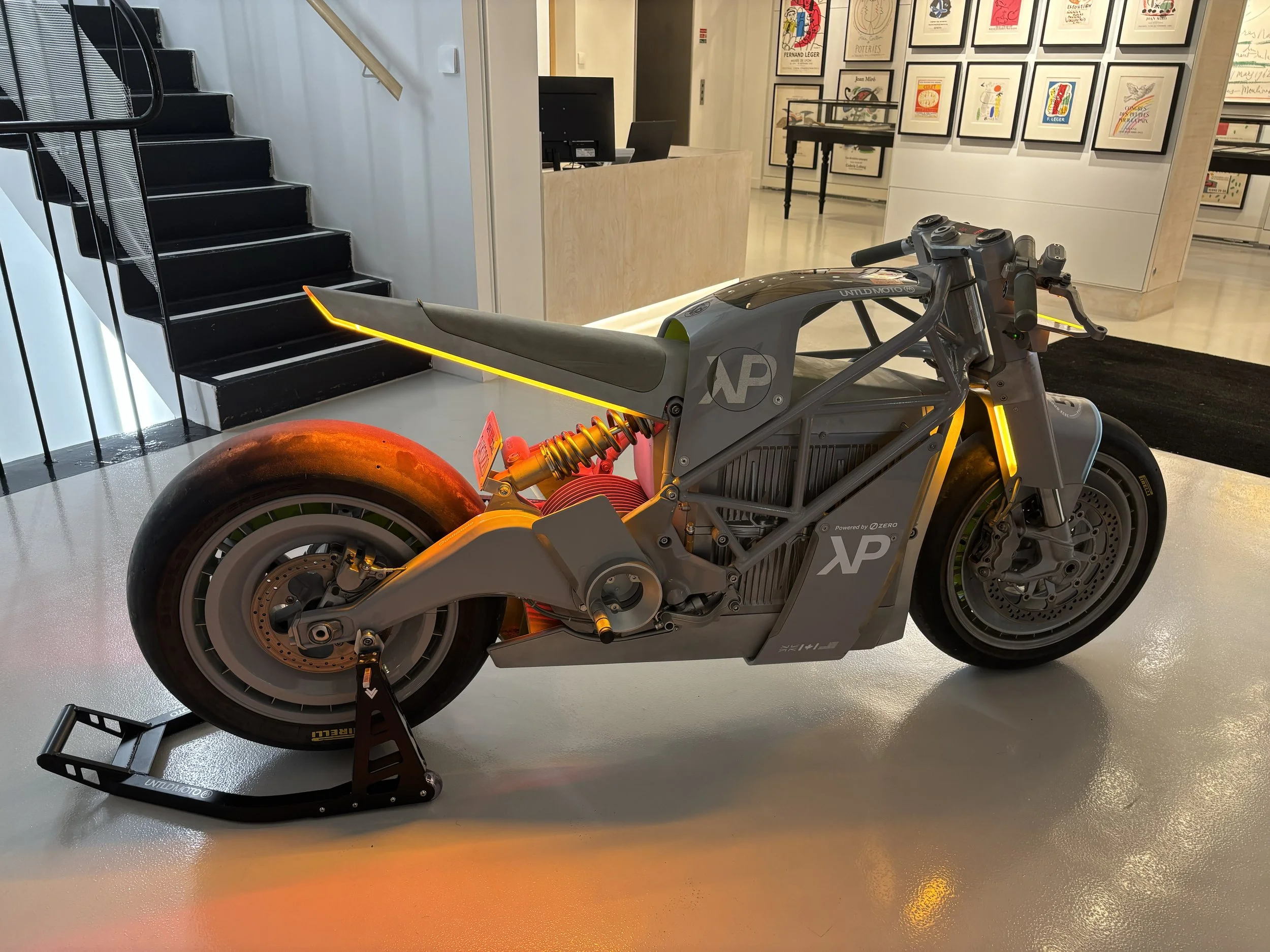
Hugo Eccels’ XP Zero
A talk expressing the value of research questions and setting guardrails that not only focus the project but allow for creative flow within boundaries, reducing feature and scope creep.
Simplicity has to compete with feature creep.
Businesses find it easier to add than subtract.
A new feature is visible. It can be placed on packaging, demonstrated in a presentation and used to justify a new model or price point. Simplicity is harder to show because its value often comes from what is no longer there.
This creates feature creep: products accumulate functions, modes and interfaces until capability begins to undermine usability.
Research into feature fatigue found a revealing tension. Before using a product, consumers can be attracted by greater capability. After living with it, usability becomes much more important. People may therefore choose the product with more features but become less satisfied when those features make it harder to use.
Hugo’s response is to frame briefs around benefits rather than feature lists. If “really simple to use” is treated as a core benefit, removing something becomes as defensible as adding it.
That does not mean simplicity should become a stylistic preference. A visually minimal product can still hide a confusing interaction, complex maintenance model or inaccessible service ecosystem.
Meaningful simplicity reduces the burden placed on the user. It might mean:
Fewer decisions at the point of use
Clearer feedback and greater predictability
Less setup, maintenance or recovery
Easier learning without limiting expert control
Removing features that do not support the primary outcome
The strategic question is not “How can we make this product do less?” It is:
“What must remain so the user can achieve more with less effort?”
Constraints can create originality.
The XP Zero electric motorcycle demonstrates how a carefully selected constraint can unlock a radically different design direction.
Instead of asking how to make an electric motorcycle look more futuristic, Hugo effectively wound the clock back to the late nineteenth century, when electric and combustion technologies were both competing to shape personal transport.
He then asked:
“What might a contemporary motorcycle look like if combustion had never become dominant?”
This created an alternative present rather than a prediction of the future. References inherited from petrol motorcycles could be rejected because, within the imagined world, they would never have existed.
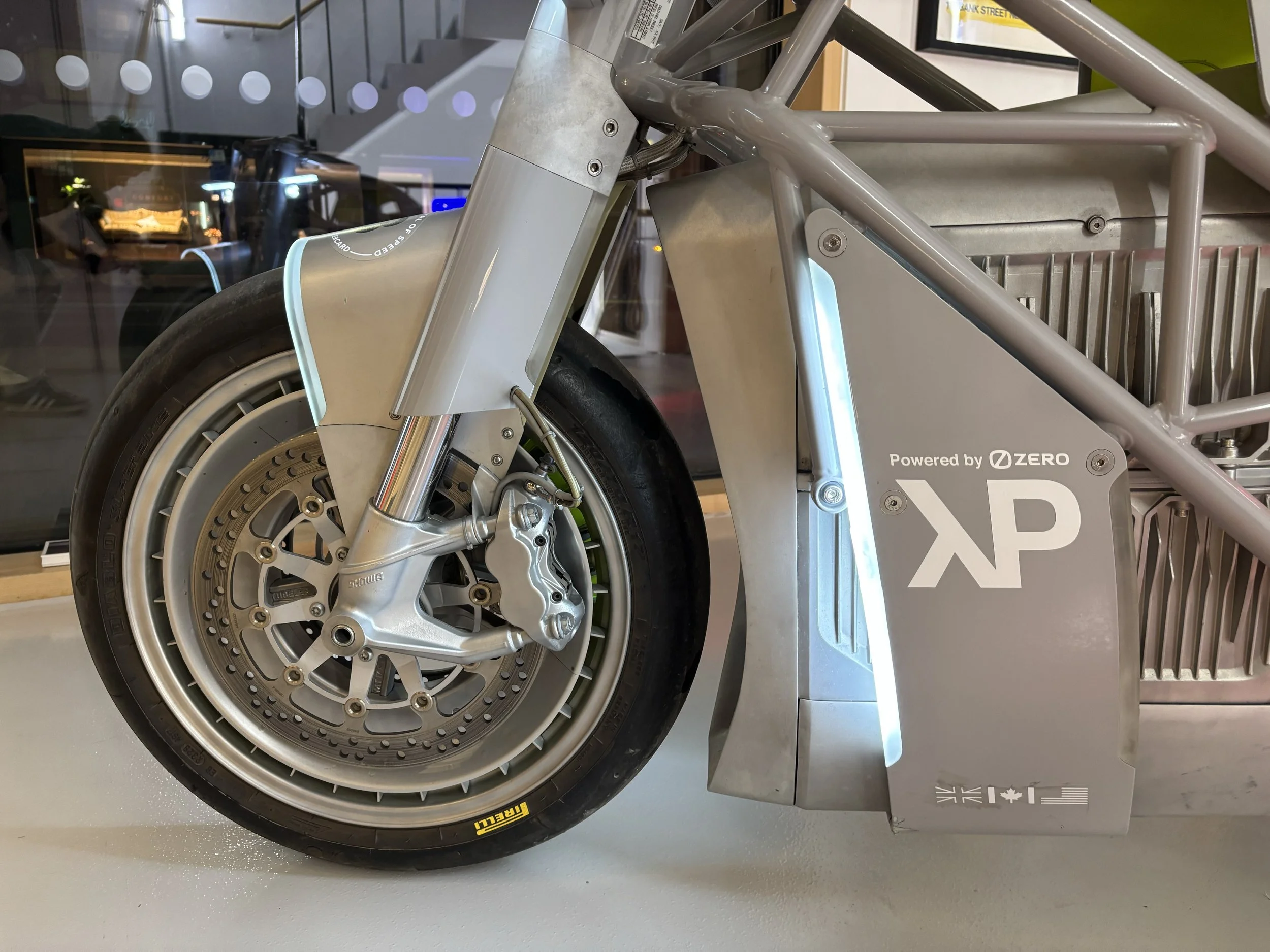
Zero Motorcycles describes how the resulting XP was stripped back to its essential electric architecture before only necessary elements were reintroduced. The technology was exposed and celebrated rather than disguised beneath the visual language of tanks, engines and exhausts.
The rules narrowed the creative field, but that narrowing produced coherence.
Research into creativity under constraints supports the broader principle that constraints can act as both restrictions and enablers. Total freedom can leave teams without a basis for judging ideas, while thoughtfully selected boundaries direct attention and force different connections.
The critical challenge is distinguishing between three kinds of constraint:
Fixed realities
Safety, physics, regulation, cost, manufacturing and genuine user needs.Generative rules
Deliberately chosen parameters that give the exploration focus and internal logic.Inherited assumptions
Conventions that appear fixed only because the category has repeated them for years.
Strong innovation respects the first, intentionally designs the second and challenges the third.
The XP Zero’s “no combustion-era references” rule was not an objective truth. It was a creative decision. But because the rule was explicit and consistently applied, it became a powerful filter for evaluating ideas.
Alternative realities are strategic tools, not predictions.
Alternative histories can help organisations escape the shadow of their existing category.
This is particularly valuable for established brands. Heritage can provide credibility and emotional meaning, but it can also force every new proposition to imitate the products that came before it. New technology then becomes trapped inside old cultural codes.
A counterfactual world creates temporary distance from those conventions.
Teams might ask:
What if the dominant technology had never existed?
What if the category had originally been designed by an excluded audience?
What if repair and upgradeability had always been commercial requirements?
What if access mattered more than ownership?
What if the brand’s founding purpose had evolved through a different product category?
This approach connects with Anthony Dunne and Fiona Raby’s work on speculative design, which uses “what if” questions to imagine alternatives and debate which futures people do, or do not, want.
Hugo’s application differs in an important way. The XP Zero is not only a provocation intended to start a conversation. It is a functioning motorcycle built around an existing technical platform. The alternative reality created direction, but industrial design had to negotiate that direction with engineering, ergonomics, production and real-world use.
That movement back into reality is essential.
Counterfactual thinking can reveal possibilities, but it cannot prove that customers want them. Every speculative direction must eventually be tested against:
Human desirability
Social and cultural acceptability
Technical feasibility
Commercial viability
Brand credibility
Environmental consequences
Production and service ecosystems
Alternative realities are most valuable when they change what a team can imagine in the present, not when they become an escape from present-day evidence.
From prop maker to playwright.
Hugo’s “playwright, not prop maker” framing does not make the physical product less important.
The prop still has to perform. Its dimensions, weight, tactility, reliability, repairability and cost determine whether the wider experience succeeds.
The more valuable interpretation is that designers should help write the play while understanding exactly how its physical components make it possible to perform.
For innovation teams, this creates a practical set of questions to ask before committing to execution:
What context are we really designing for?
Identify the object, occasion, space or relationship organising behaviour.What is the ultimate user goal?
Move beyond the requested product to the functional, emotional and social progress people want.Are we solving the right question?
Treat the initial brief as something to investigate and reframe.Which benefits matter enough to remove features?
Make simplicity a measurable outcome rather than an aesthetic preference.Which rules could unlock a more coherent direction?
Separate unavoidable realities from useful creative constraints and inherited assumptions.What alternative reality would expose new possibilities?
Temporarily remove the category’s dominant technology, audience or convention.How will the idea survive contact with reality?
Test the resulting direction with people, culture, engineering and commercial evidence.
The greatest value of strategic design often appears before an idea becomes an object.
It lies in recognising the wider context, finding the question worth answering and creating the conditions from which a better proposition can emerge.
That is the territory I help organisations navigate: turning consumer insight, cultural change and emerging behaviours into clear opportunity spaces, differentiated propositions and actionable innovation pipelines.
If your team is working with a broad brief, fragmented insight or an innovation pipeline with more ideas than direction, I have capacity for selected freelance and consulting engagements.